Galapagos Islands
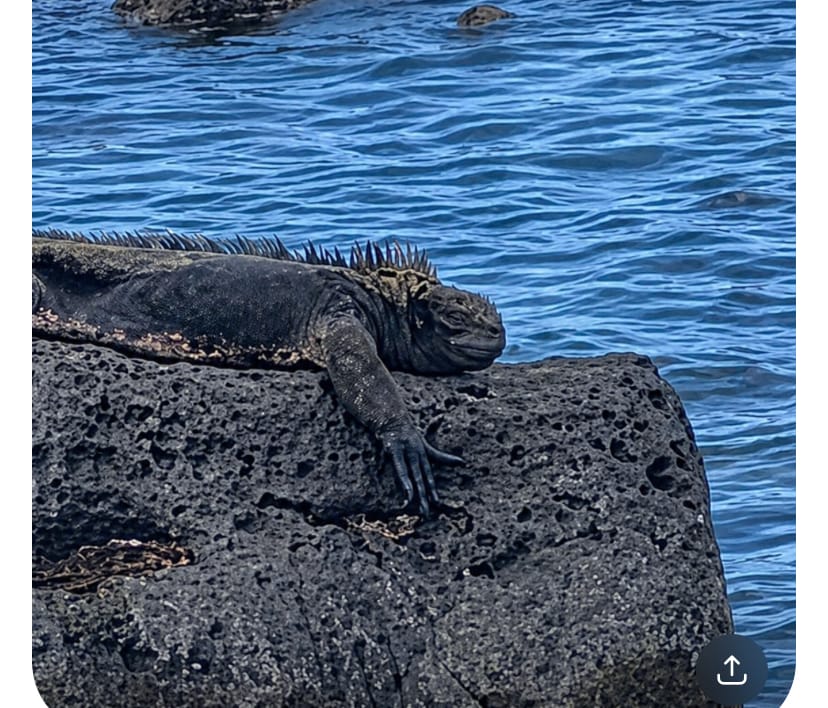
My journey to the Galápagos Islands brought me face to face with so many fascinating animals on land and in the sea, from the Galapagos Giant Tortoise, to the Blue Footed Booby, the rare Galapagos Penguin, to massive Marine Iguanas and many more. Some lived on all the islands - but some lived only on a few.
GETTING THERE
The Galapagos Archipelago is part of Ecuador, off South America. There are two main airports, one on San Cristobal Island SCY and the other on Santa Cruz Island GPS, The San Cristobal airport is on the eastern edge of the Galapagos chain, conveniently located on the coast a short distance to the main town. Santa Cruz Island is in the middle of the Galapagos but the airport is on a small island about an hour outside the main town, so visitors need to take an airport shuttle bus then a water taxi then a truck taxi to get to town.
AMAZING EXCURSIONS
The entire Galápagos Island chain is a UNESCO World Heritage Site. The islands had rugged rocky shorelines, some white sand beaches nestled in coves, and sapphire blue waters. Coastal areas were covered with green low lying vegetation, dark lava rocks, and tall cactus. Inland areas had fertile soil, lush tropical trees and scenic volcanos, some of them active! Rental cars were not allowed anywhere in the Galapagos so visitors either used land based tours, or sea based tours. I spent almost a month island hopping because I wanted to have enough time to experience everything.
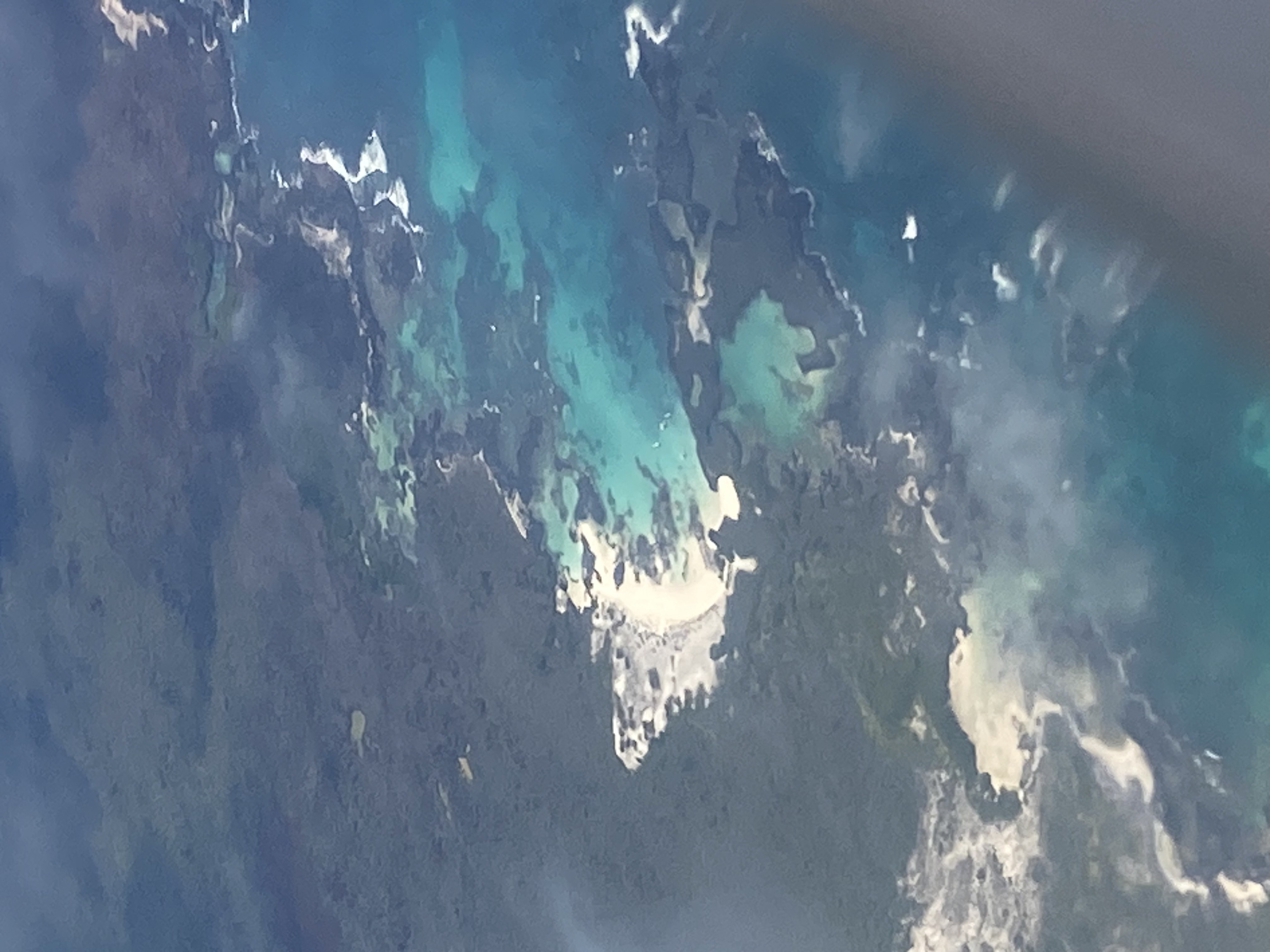
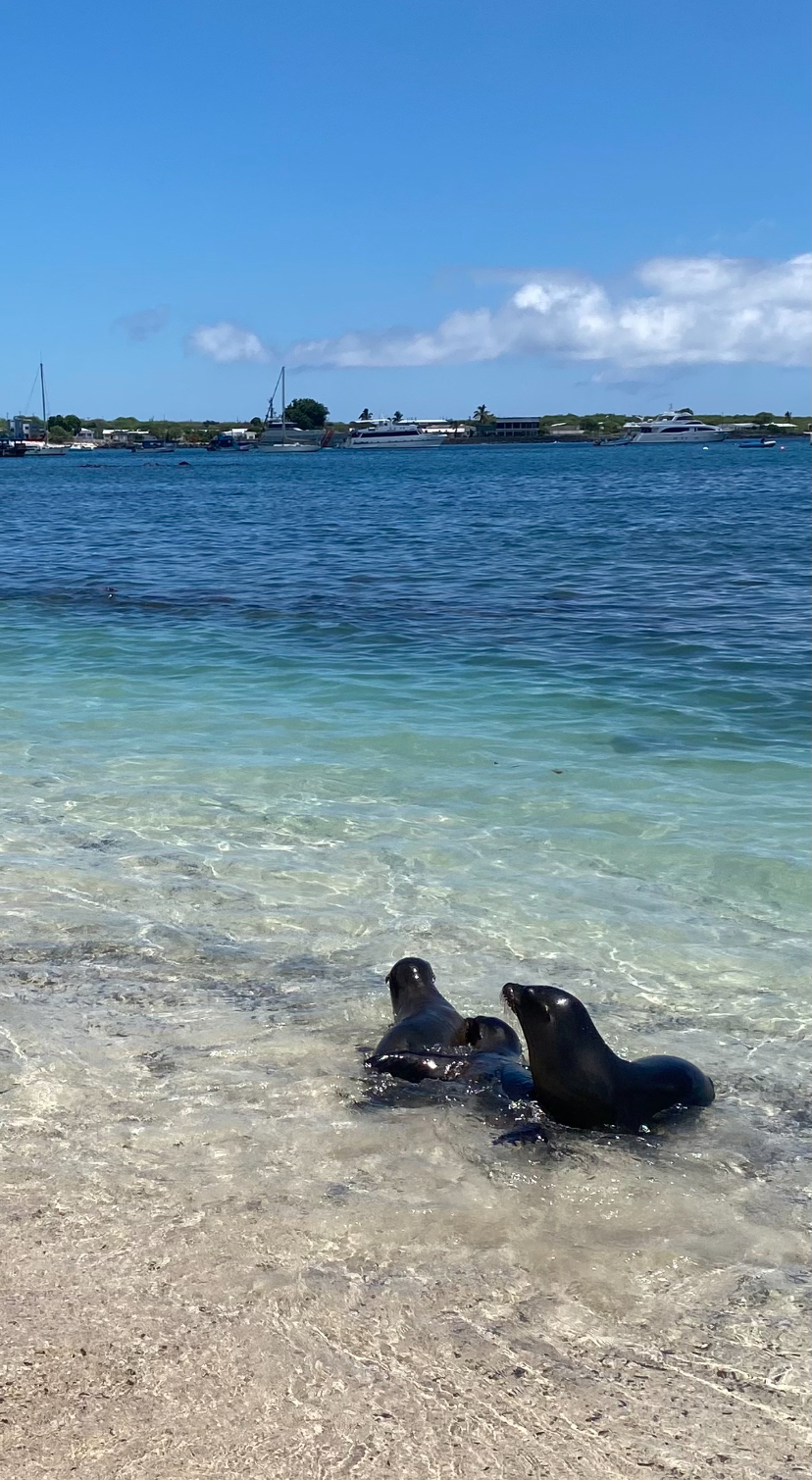
I started my adventures on San Cristobal Island, which was where Charles Darwin landed in the 1800’s and honed his theory of evolution. San Cristobal had a little bit of everything, along with a lot of sea lions! There were seaside restaurants, small hotels, and many animals. Baby sea lions were everywhere and they played with me when I went snorkeling at Playa Carola beach. The beach was also a Marine Iguana nesting site, so there were massive iguanas on the shore, in the bushes, and in the sea. Blue Footed Boobies rested on lava rock cliffs, Frigate birds and Pelicans soared through the sky.
San Cristobal had a popular 360 boat tour which went to Kicker Rock for snorkeling with sharks, sea turtles and other marine life, then it went on to Punta Pitt, the only place where all three Booby birds live together - the Blue Footed, the Red Footed, and the Nazca Booby. There was also a Highlands tour, to climb a volcano, visit a giant tortoise reserve and stop by a secluded beach. In addition, San Cristbal offered day trips to explore Floreana Island, Espanola Island, Los Lobos and others.
San Cristobal also had a main ferry port. The ferries were about 40 foot fishing boats outfitted with seats to carry passengers inside a section that was covered from the sun’s strong rays.
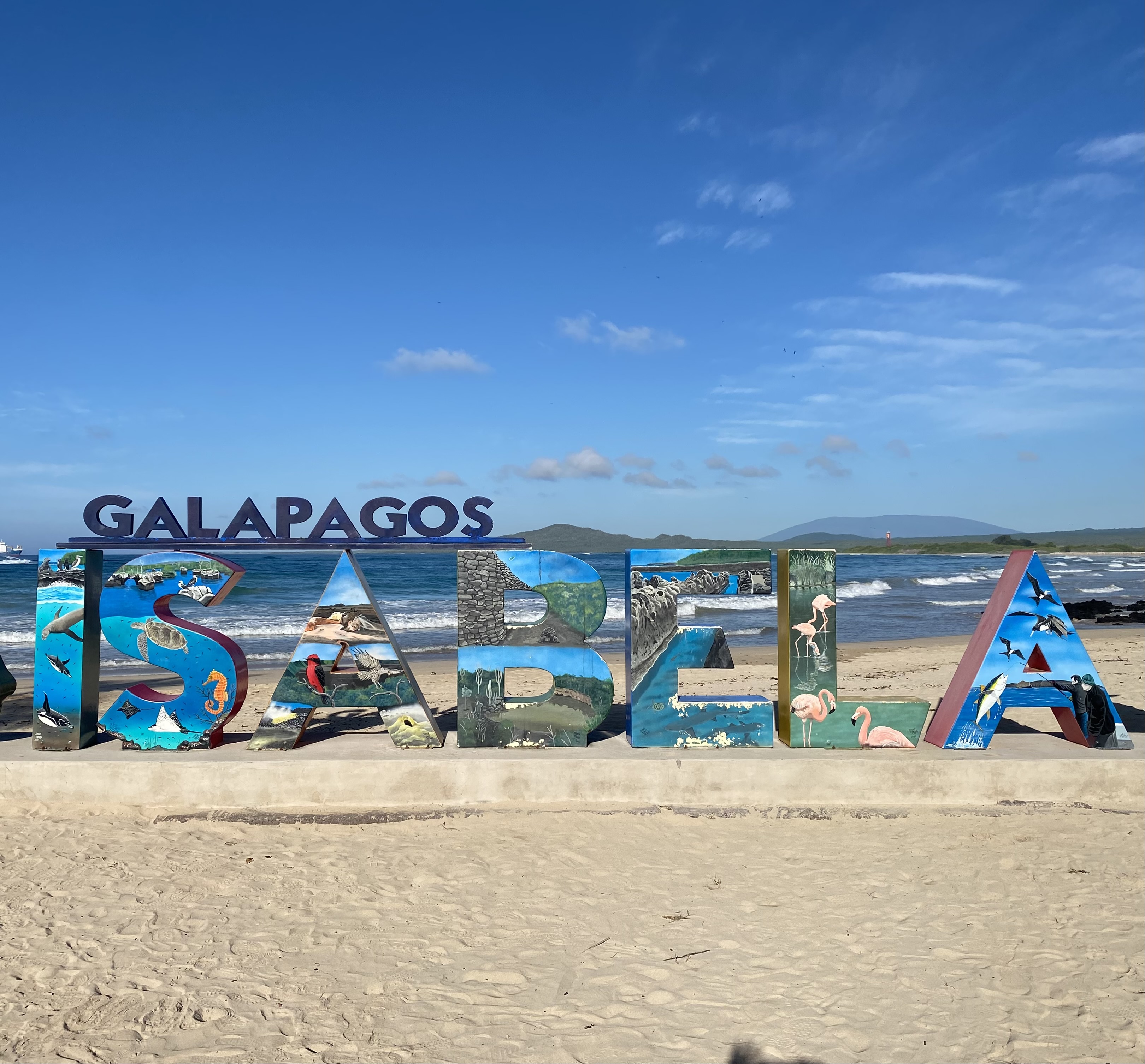
I took two ferries to get to Isla Isabela, a remote island on the western edge of the Galapagos. It was one of the most undeveloped places I’ve ever been, so there was a large number of animals, on the land and in the water. It was also unique because a long white sand beach rimming the little town, and the shoreline was lined with only a few small restaurants, inns and scenic lookouts.
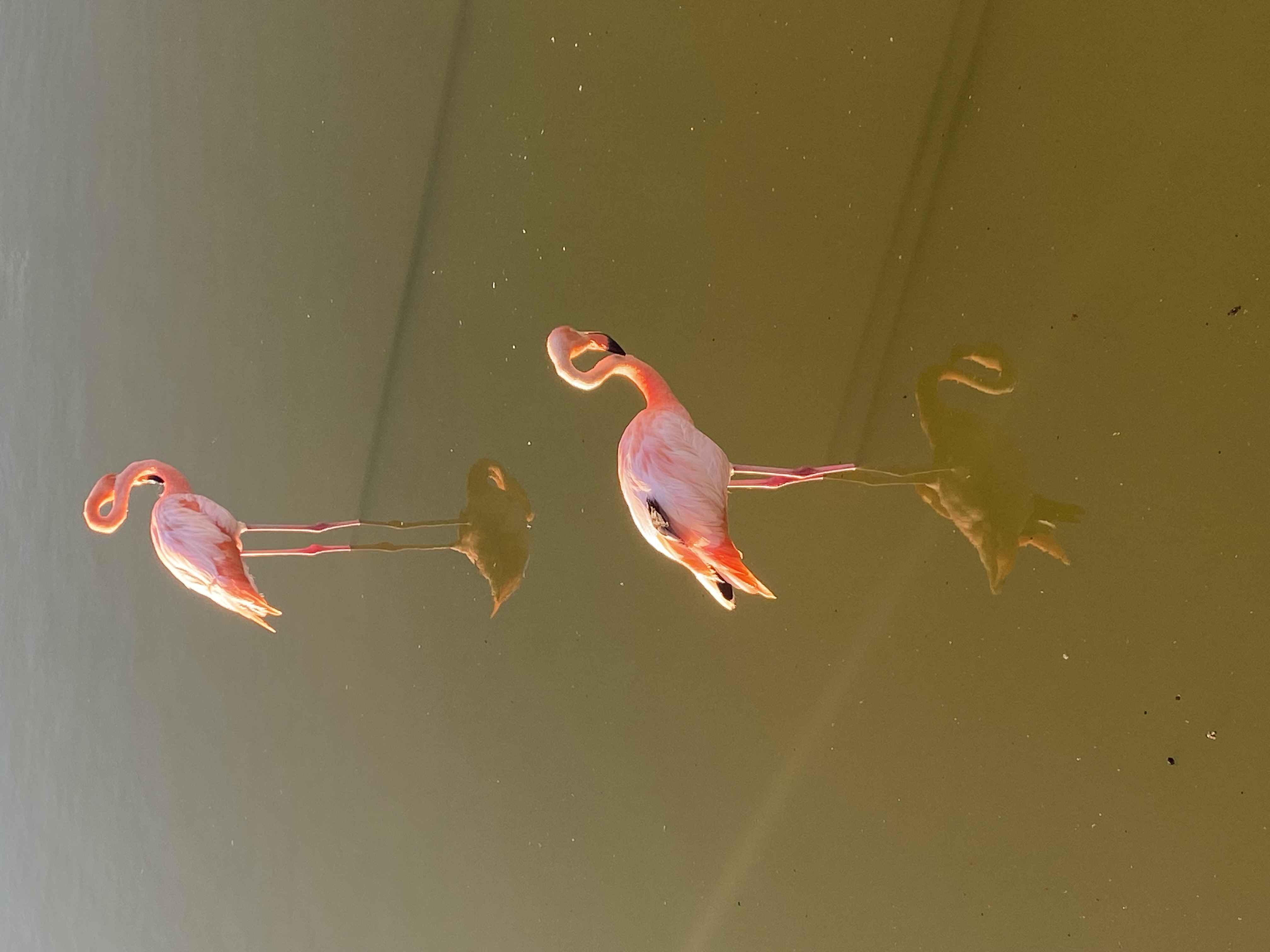
On the edge of town was Laguna Salinas, a favorite feeding spot for the island’s Galapagos Pink Flamingos. The brackish water was filled with brine shrimp, which turned their feathers colorful shades of pink. It was one of the only places in the Galapagos chain that had flamingos.
I took a popular boat trip just offshore to Las Tintoreras Islet, named after the sharks which called it home. The little Galapagos penguin also lived there, one of only a few places it lived in the islands. I was lucky enough to see two little penguins and I also swam with two large 7 foot Whitetip Reef Sharks, hundreds of huge Surgeonfish, giant Parrotfish, a Galapagos Sea Turtle, and Spotted Eagle Rays.
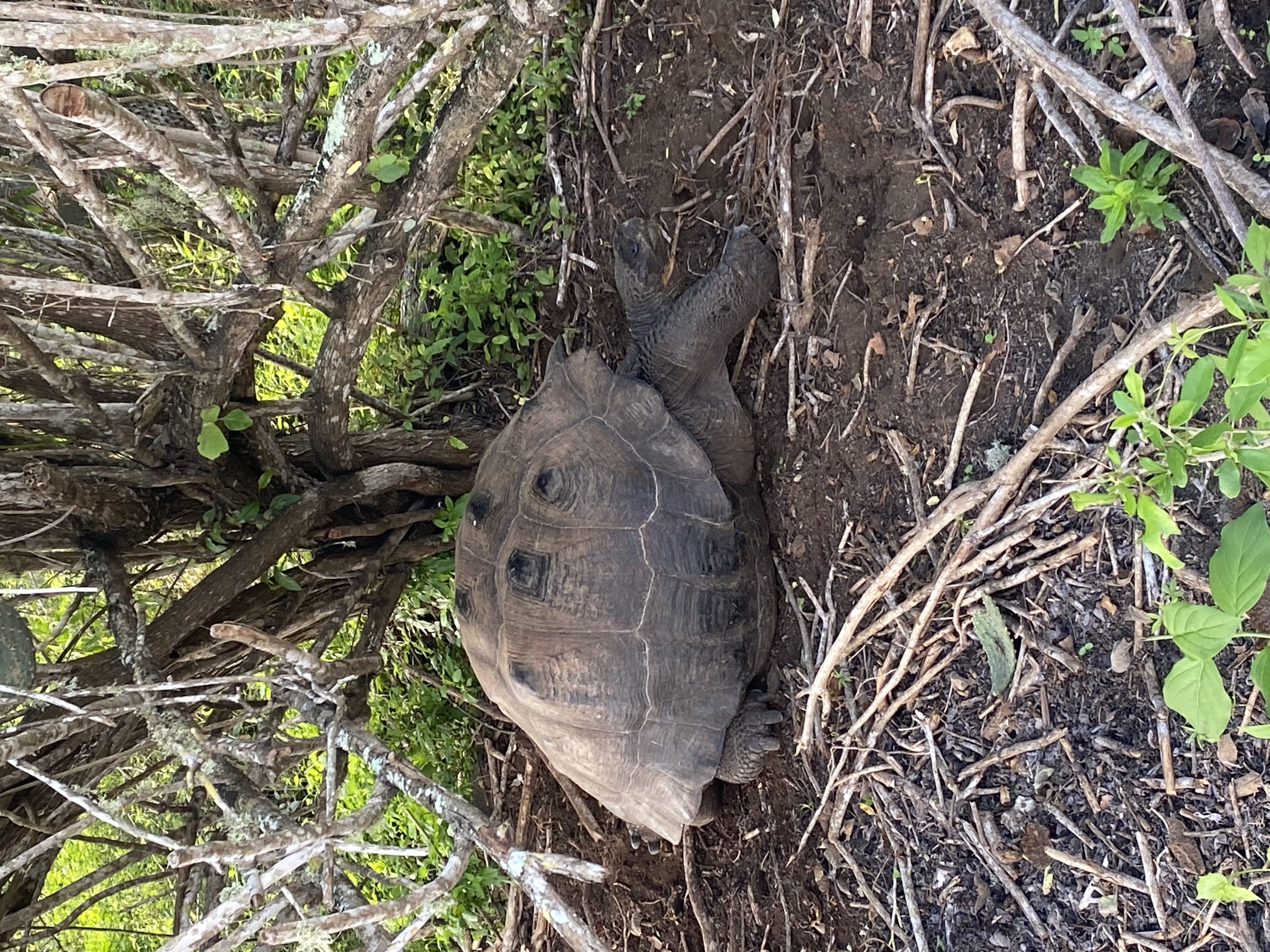
Isabela Island was also one of the only places to see Galapagos Giant Tortoises truly in the wild, not on a reserve. I hiked for miles to a place called Camino De Tortugas where they were known to live. It was difficult to spot one in the landscape of mangrove marshland, downed trees, undergrowth, and dark lava rock. I was on the verge of giving up, but then on the left side under a low tree canopy was a giant tortoise, about 500 pounds!
From Isabella I ferried to Santa Cruz Island. The main town was the most developed in all of the Galápagos Islands and a hub for tourism, with diving, sport fishing, and day trips to Santa Fe Island, North Seymour Island, Bartolome, and others.
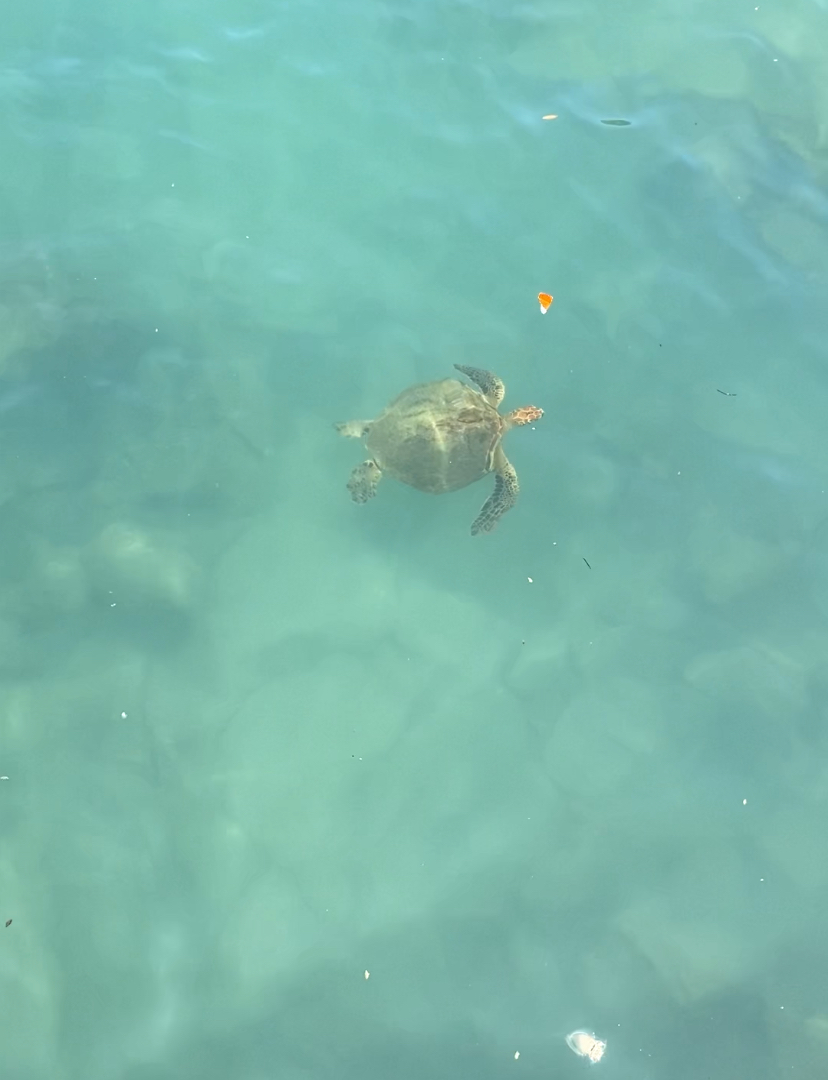
Right from shore I could see dozens of two foot long Blacktip Reef Sharks circling in the water, along with Spotted Eagle Rays, big and small, and Galapagos Green Sea Turtles, munching on leaves blown in by the wind. In the air, Blue Footed Boobies and Pelicans were hunting for fish and I saw a booby skillfully dive into the water, and catch a small fish in its big beak.
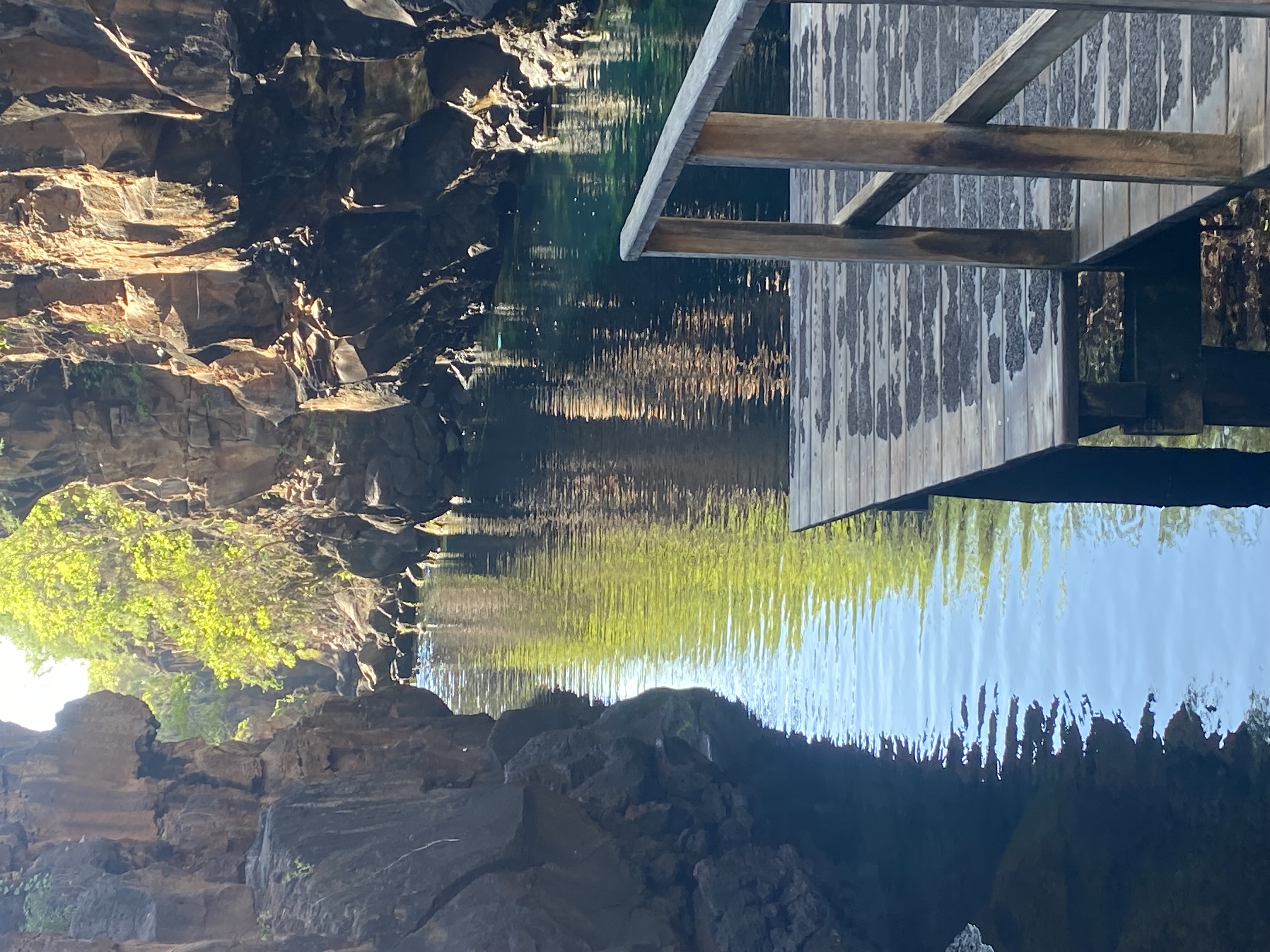
I jumped on a water taxi, then hiked through a cactus forest to a swimming area called Las Grietas. It was a deep fissure in the volcanic rock, about 20 foot wide, and 40 foot deep, which was partly filled in with a combination of fresh water and ocean water. I snorkeled inside the cool crystal clear water and saw schools of fish and some thin eels, which almost looked like snakes!
Santa Cruz was also home to the large, modern Darwin Foundation and Research Center. It had detailed free exhibits about Darwin’s work, the threats to Galápagos Islands and the many conservation projects underway with the help of scientists from around the world.
A journey to the Galápagos Islands is a trip of a lifetime, immersed in nature. With so many islands to explore, so many options available, and so many interesting animals, it’s best to set a list of priorities, and plan a voyage around them.